AI-Driven Workflow Transformation
Integrating AI into enterprise workflows to accelerate decision-making, reduce manual effort, and improve operational efficiency.
Overview
At a large insurance organization, underwriting teams relied on manual processes
to evaluate risk, interpret business rules, and produce technical requirements.
I led the integration of AI across the product design and business analysis
lifecycle — transforming how teams gathered requirements, generated insights, and
moved from idea to validated solutions.
This approach shifted workflows from manual and fragmented to intelligent,
automated, and scalable.
The Challenge
Enterprise underwriting workflows were heavily manual, slow, and inconsistent. Teams were spending more time interpreting information than making decisions.
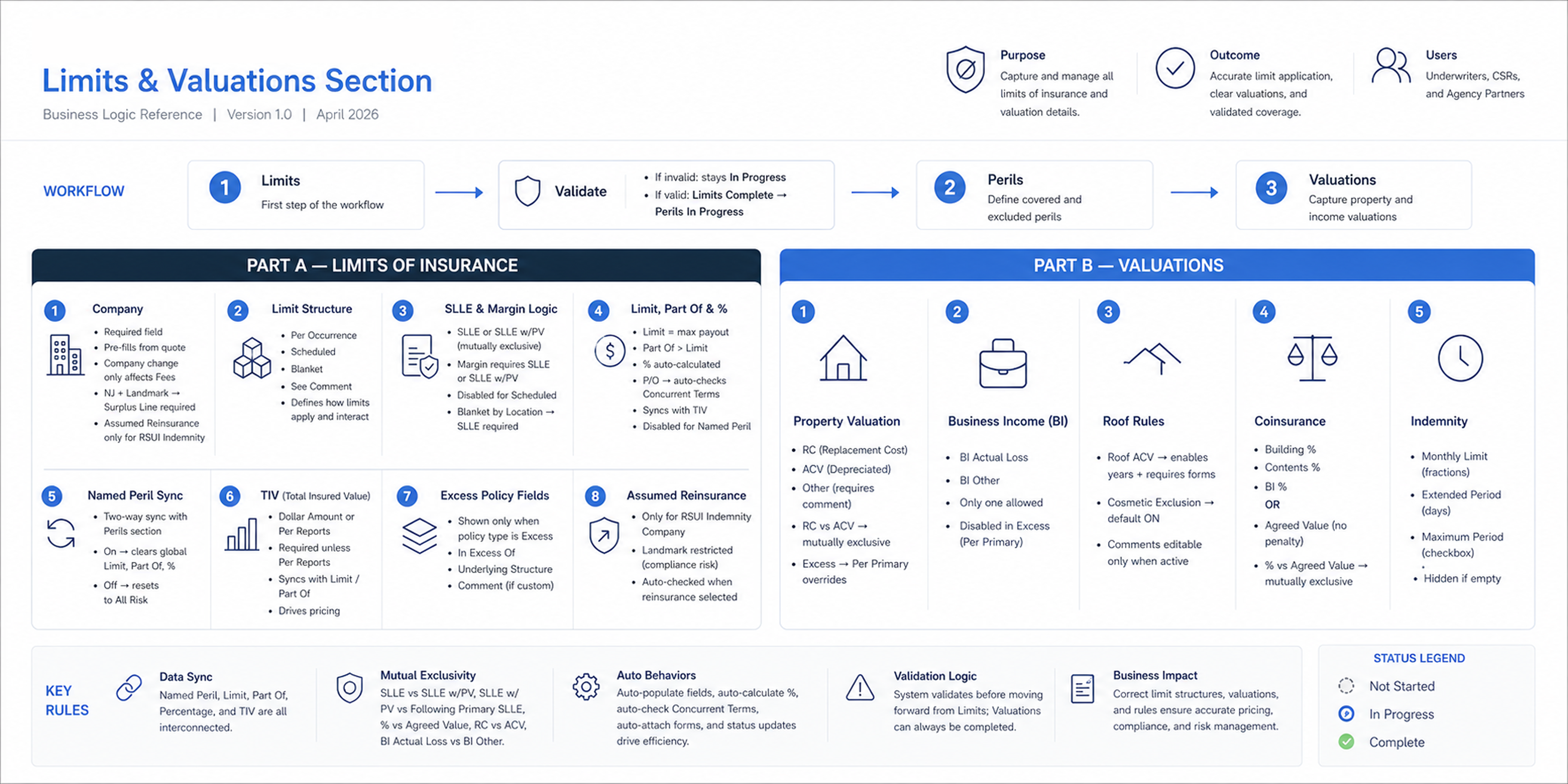
• Large volumes of business rules spread across legacy systems
• Time-consuming requirement gathering and documentation
• Inconsistent analysis across teams
• Manual document review and decision processes
• Slow transition from idea → design → development
The Solution
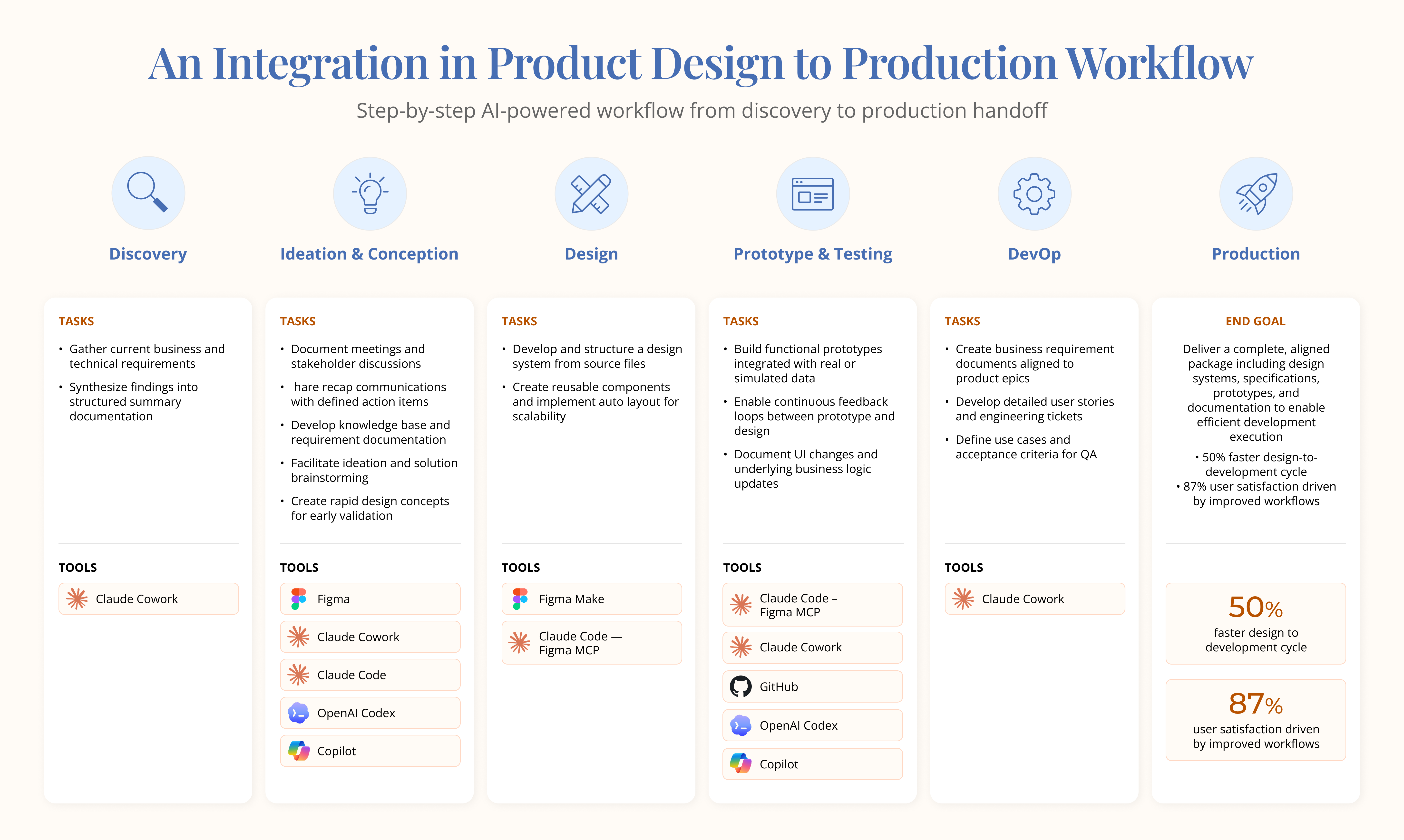
AI-Powered Discovery & Requirement Synthesis
• Used AI to extract and consolidate existing business rules across systems
• Automated summarization of research, interviews, and documentation
• Generated structured business requirements and gap analysis
• Reduced ambiguity in early-stage product definition
AI-Assisted Design & Prototyping
• Accelerated idea-to-design workflows using AI-assisted generation
• Rapidly created live, testable prototypes for validation
• Enabled faster usability testing and feedback loops
• Bridged design and engineering through AI-supported outputs
Workflow Automation & Decision Support
• Introduced AI-driven recommendations within underwriting workflows
• Automated repetitive tasks and document processing
• Designed decision-support interfaces for risk evaluation
• Reduced friction across critical operational flows
Design Leadership
01 — Vision & Strategy
Defined the vision for AI-integrated product workflows across teams.
02 — Stakeholder Alignment
Partnered with product, engineering, and business stakeholders to align on adoption and establish shared goals.
03 — New Process Design
Established new processes combining UX, AI, and business analysis to streamline the full product lifecycle.
04 — Experimentation & Implementation
Led experimentation and implementation of AI tools across the product lifecycle — from discovery through delivery.
05 — Cross-Functional Execution
Bridged strategy, design, and technical execution. This was not just feature design — it was a shift in how teams work.
Impact
• Faster underwriting decision-making
• Improved operational efficiency across teams
• Reduced manual effort in research and documentation
• Accelerated product design and development cycles
• Increased adoption of AI-assisted workflows
Additional outcomes supported by implementation:
• 50% faster design-to-development cycle
Takeaway
AI is most impactful when applied to workflows, not just features.
By embedding AI across discovery, design, and decision-making, teams moved from manual execution to intelligent systems — enabling faster outcomes, better alignment, and scalable product development.